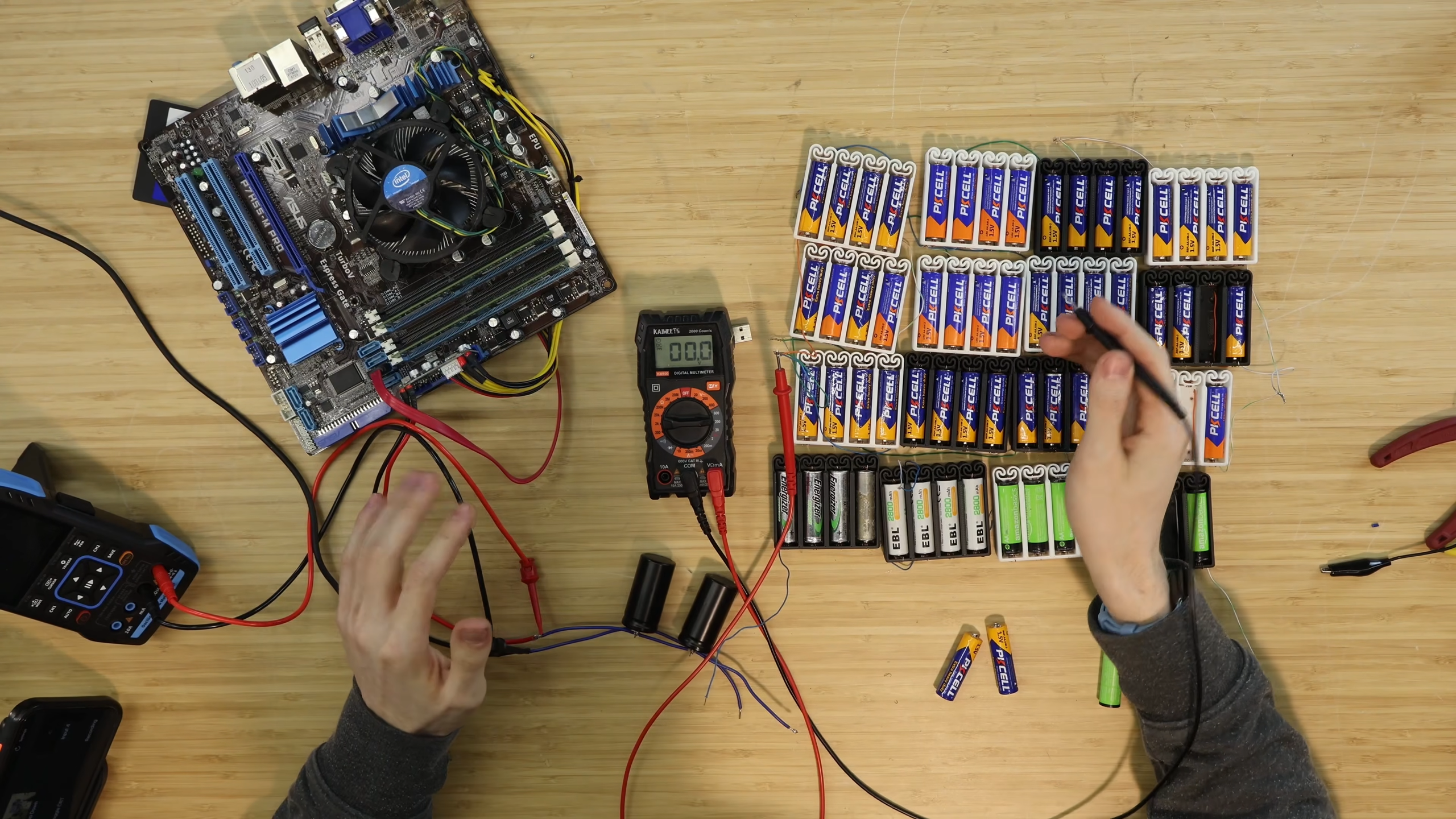
Tech creator ScuffedBits recently demonstrated that 64 AA batteries cannot sustainably power a gaming PC for modern standards. The experiment lasted exactly 33 minutes and 19 seconds before the system shut down due to critical power depletion. This latest iteration serves as a practical proof of concept regarding energy density limitations in consumer electronics. While the setup technically works, it highlights the massive gap between portable energy and high-performance computing needs.
The setup utilized a mix of carbon, alkaline, and nickel metal hydride rechargeable batteries to create a 25-volt pack. ScuffedBits managed to run a full CineBench CPU stress test and play several rounds of Minecraft during the uptime. They also raced to the top of a mountain in the indie title A Short Hike without interruption. PC Gamer reported these specific tasks were completed successfully before the battery capacity ran dry.
This performance represents a significant upgrade from the first attempt, which barely lasted long enough to finish Minesweeper. The creator spent two weeks rewiring the circuit and adding two capacitors to buffer inconsistent voltage. These technical adjustments allowed for more stable power delivery during the stress tests. ScuffedBits broke out the soldering iron to ensure the connections could handle the draw required by the rig.
The project echoes similar efforts by other hardware enthusiasts looking to repurpose waste technology. Chris Doel previously salvaged 500 disposable vapes to power a gaming rig and his entire workshop. Such initiatives highlight creative solutions for electronic waste, even if they remain impractical for daily use. It is always heartening to see disposable tech given a renewable lease of life by the community.
Beyond individual experiments, the broader technology sector faces genuine energy constraints. The AI industry demands massive hardware and electricity, causing concerns about rising utility costs for consumers. PC Gamer notes that the power requirements for modern computing infrastructure are becoming a critical bottleneck. Investors are now questioning how the industry will manage energy costs as models become more complex. These financial pressures are forcing companies to seek government intervention.
Microsoft CEO Satya Nadella addressed this issue directly last year during industry discussions. He stated that the largest current problem is not a compute glut, but a lack of available power capacity. He emphasized that the shortage lies in finding warm shells to plug into rather than chip supply issues. His comments reflect the growing anxiety within the executive suite of major tech giants regarding infrastructure. Many leaders agree that energy availability is the primary constraint on growth.
Major technology companies including Google, Microsoft, Meta, and Amazon have recently engaged with government officials regarding energy supply. These firms signed the Ratepayer Protection Pledge to prevent household bills from escalating due to infrastructure upgrades. However, the long-term effectiveness of this protection for average consumers remains uncertain. Analysts suggest this agreement might only delay the inevitable rise in energy prices for the public. Such measures indicate a shift in how tech giants view their relationship with energy providers.
While the AA battery experiment captures attention, it underscores the difficulty of scaling power for high-performance computing. A 64-cell battery pack simply cannot compete with grid infrastructure for sustained heavy loads. The industry must prioritize energy efficiency and generation capacity over novelty power solutions. Practical alternatives require significant investment in grid modernization and renewable energy sources. This shift is critical for maintaining the pace of technological advancement.
Future developments will likely focus on grid modernization and renewable energy integration rather than portable battery hacks. Investors and policymakers need to address the physical limitations of current power distribution networks. Further progress in energy storage remains essential for supporting the growth of artificial intelligence and gaming hardware. The next phase of the industry depends on solving these logistical challenges before hardware becomes obsolete. Governments will likely play a central role in facilitating this necessary infrastructure expansion.
The comparison between AA batteries and grid power illustrates the scale of the energy challenge ahead. While creative hacks are fun, they do not solve the fundamental issue of consumption versus generation. Tech leaders must balance innovation with the sustainability of the power grid. Without significant changes, high-performance computing will remain constrained by available electricity.