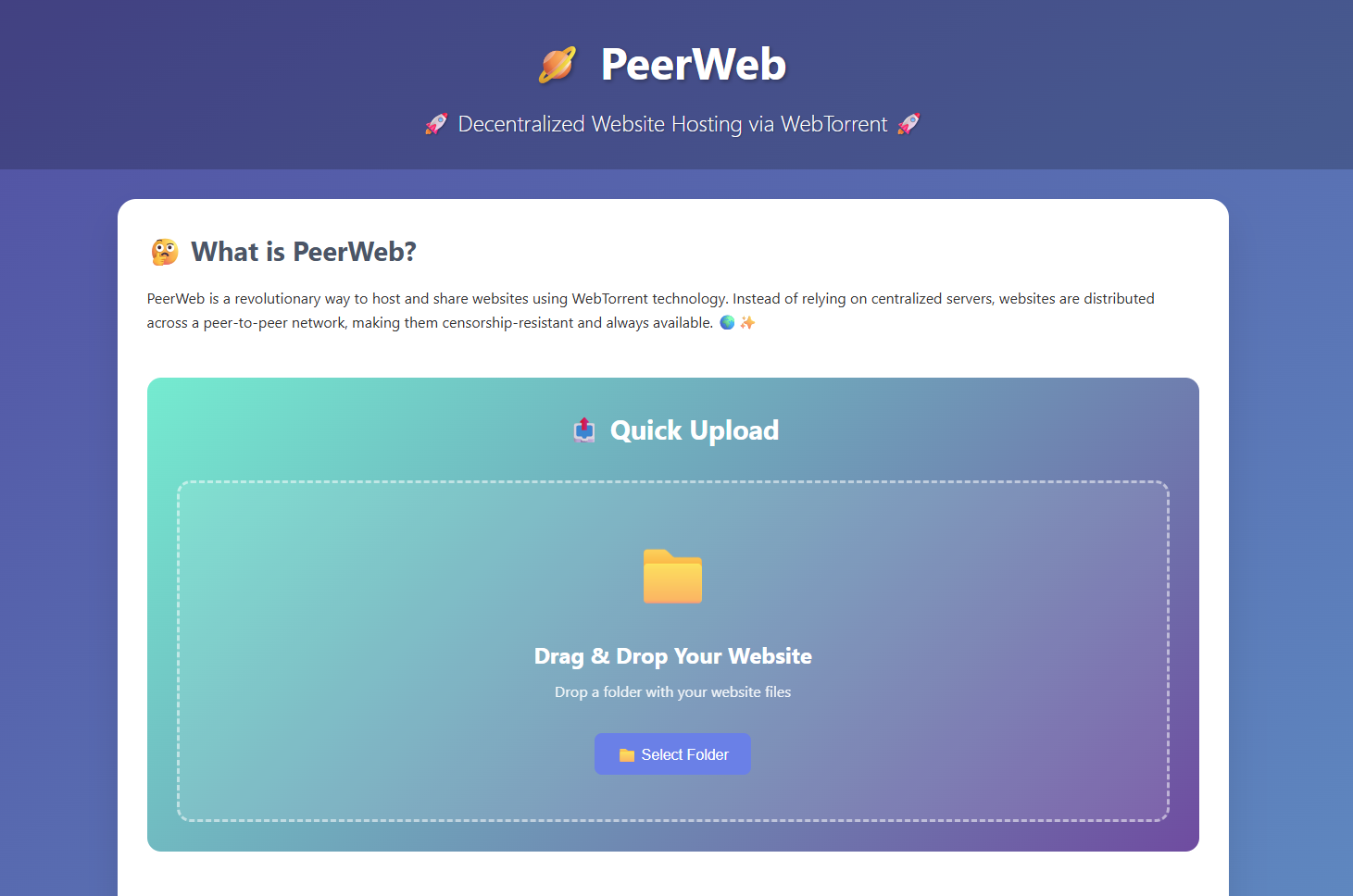
PeerWeb, a new platform detailed on its official site, is enabling website distribution entirely through peer-to-peer networking using WebTorrent protocols. This technical structure moves away from reliance on single points of failure inherent in centralized server farms, prioritizing uptime and resistance to takedowns. The core mechanism requires the host to keep the browser tab open for immediate availability, according to documentation provided by peerweb.lol.
For persistent hosting capabilities, PeerWeb offers a downloadable desktop client, which removes the dependency on an active browser session for serving content. To access a hosted site, users input a torrent hash, and the system automatically prepends the necessary magnet link structure and tracker information. The platform demonstrated functionality with several examples, including streaming media like SomaFM and interactive applications like a text editor.
This peer-to-peer distribution model inherently challenges established content delivery networks by spreading data across multiple endpoints simultaneously. The project reports incorporating DOMPurify integration, which suggests a proactive stance on mitigating cross-site scripting vulnerabilities common in web applications. Furthermore, PeerWeb implements caching for previously visited sites to ensure rapid loading times for returning users.
Developers interested in inspecting the underlying processes can append a debug parameter to the URL to view detailed progress reports of the torrent seeding and retrieval operations. This level of transparency is critical for diagnosing network issues within a decentralized framework. The platform emphasizes that only the hash is required for retrieval, abstracting away complexity for the end-user.
While browser-based hosting offers immediate accessibility for testing, the necessity of keeping a tab open represents a limitation for high-availability commercial deployment. The desktop client appears positioned as the solution for professional or long-term static site hosting within this P2P ecosystem.
The adoption of WebTorrent for website delivery represents a continuing trend of leveraging established file-sharing technology for broader web infrastructure purposes. Examining the success of these decentralized hosting solutions will provide insight into the viability of alternatives to the dominant cloud providers.
Ultimately, PeerWeb seeks to democratize hosting by lowering the barrier to entry while simultaneously building in resilience against content suppression. The project's success hinges on the sustained participation of users willing to dedicate bandwidth to seeding content for others.