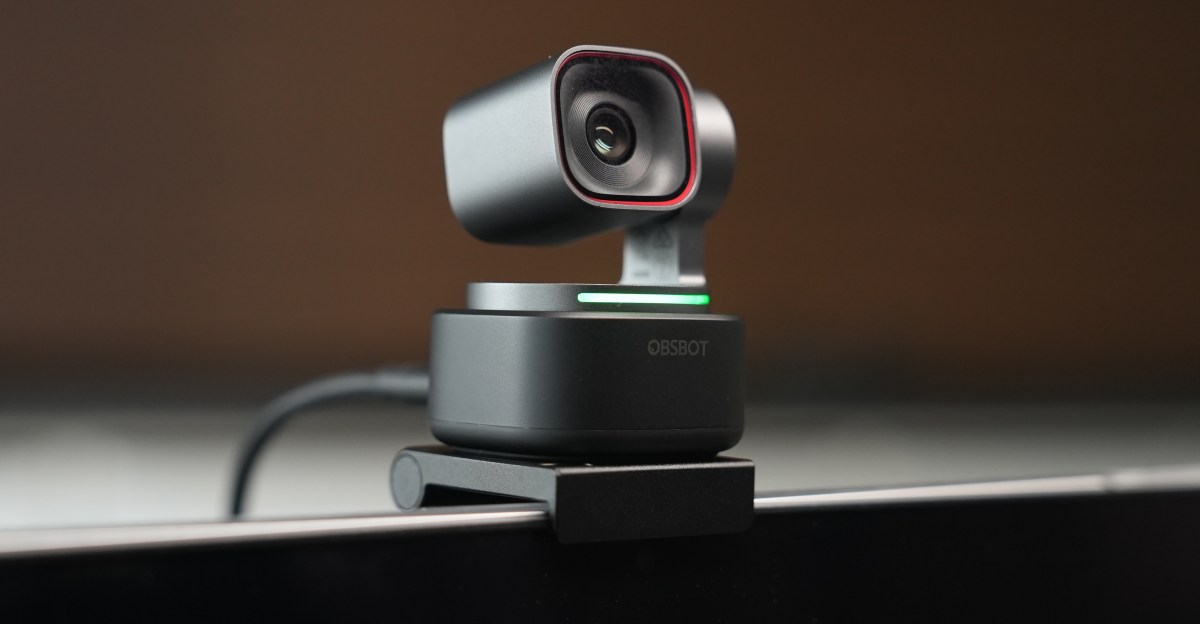
Webcam manufacturer Obsbot introduced two new models this week, the $349 Tiny 3 and the $199 Tiny 3 Lite, claiming the former is the world’s smallest 4K pan, tilt, zoom (PTZ) webcam. After testing the flagship Tiny 3 for several weeks, initial impressions suggest the hardware upgrades do not sufficiently warrant the high cost when compared to established rivals like the Insta360 Link 2 Pro.
The Tiny 3 incorporates a larger 1/1.28-inch sensor with an f/1.8 aperture, aiming for better light capture and reduced noise compared to its predecessor and the Lite version. While the resulting 4K/30fps video footage is sharper than the budget model, the visual quality difference against a three-year-old competitor remained marginal during testing, according to reports from The Verge.
Obsbot heavily promoted the inclusion of MEMS microphones, which the company asserted could match dedicated external microphones by better filtering ambient noise. Testing confirmed the microphone array captured slightly more detail, particularly with musical instruments, but this nuance is often lost due to standard video conferencing compression.
Voice control features, such as activating tracking with the phrase “Track Me,” function reliably, even with muttered commands. However, reviewers noted that the unexpected activation of tracking during professional meetings proved disruptive enough to prompt users to disable the feature entirely.
Both new webcams support 4K at 30 frames per second and up to 120 frames per second at 1080p resolution. The premium Tiny 3 offers a slightly wider field of view and a higher maximum ISO of 12800 versus 6400 on the Lite model, providing minor advantages in low-light scenarios.
Crucially, the usability experience appears compromised by the accompanying software suite. The companion application was described as overstuffed and difficult to navigate, with essential functions buried among infrequently used settings. This contrasts sharply with competitors who have streamlined their software interfaces for rapid deployment before and during video calls.
Ultimately, while the Tiny 3 presents incremental hardware refinements in sensor technology and audio capture, the overall package, marred by complex software and a high price tag, fails to establish a compelling value proposition against existing market offerings.
The next critical step for Obsbot involves optimizing the user experience surrounding these advanced features. If the premium hardware cannot be easily managed through intuitive software, future adoption within professional environments, where efficiency is paramount, will likely remain constrained.