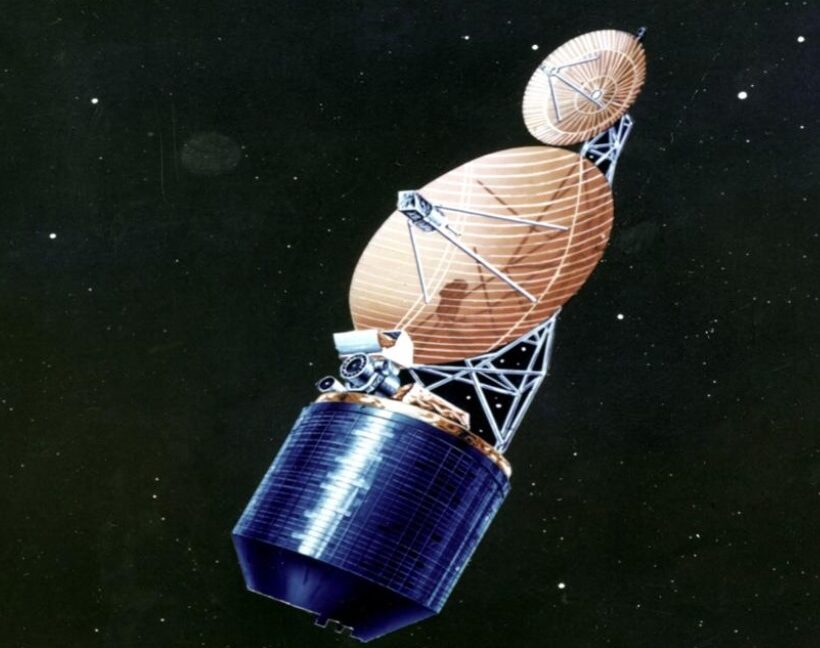
The National Reconnaissance Office (NRO), which manages the United States’ fleet of reconnaissance satellites, recently declassified information concerning the Jumpseat program, a Cold War-era effort dedicated to eavesdropping on Soviet military communications. While the program's existence was previously known through media reports and leaks, the NRO’s official release includes specific descriptions of its mission parameters and imagery of the spacecraft, according to the agency’s statement.
Jumpseat is identified by the NRO as the United States’ inaugural highly elliptical orbit (HEO) signals-collection satellite system, with eight launches occurring between 1971 and 1987. The satellites remained operational until 2006, continuing their surveillance mission even after the NRO’s existence ceased to be a state secret. The core objective involved monitoring “adversarial offensive and defensive weapon system development,” the NRO reported.
These platforms collected a wide range of intelligence, including electronic emissions, communications intelligence, and foreign instrumentation intelligence. Data intercepted by the Jumpseat constellation was routed to key national security bodies, specifically the Department of Defense and the National Security Agency. The Soviet Union constituted the primary focus of Jumpseat’s intelligence collection efforts throughout its operational lifespan.
The satellites utilized highly elliptical orbits, fluctuating between a few hundred miles and approximately 24,000 miles above Earth. This specific trajectory was engineered so the spacecraft reached apogee, their orbital peak, over the far Northern Hemisphere. At apogee, velocity is lowest, allowing the satellites to loiter over areas like the Arctic, Canada, and Greenland for a significant portion of their twelve-hour orbital period.
This persistent coverage over the Arctic region was strategically important, as the Soviet Union had already recognized the utility of this orbital path. The Soviets deployed their own communication and early warning satellites into the same configuration, which they termed Molniya, the Russian term for lightning, shortly before the first Jumpseat mission commenced.
The codename Jumpseat first entered the public domain in 1986, detailed in a book by investigative journalist Seymour Hersh concerning the shoot-down of Korean Air Lines Flight 007. Hersh alleged at the time that these systems possessed the capability to intercept various communications, including voice traffic between Soviet ground crews and aircraft pilots.
This declassification offers a valuable historical record, illuminating the technical ingenuity employed during the height of the Cold War to maintain continuous signals intelligence over strategic adversaries. The NRO’s documentation confirms the long-standing importance of persistent, high-altitude surveillance platforms in the intelligence architecture.