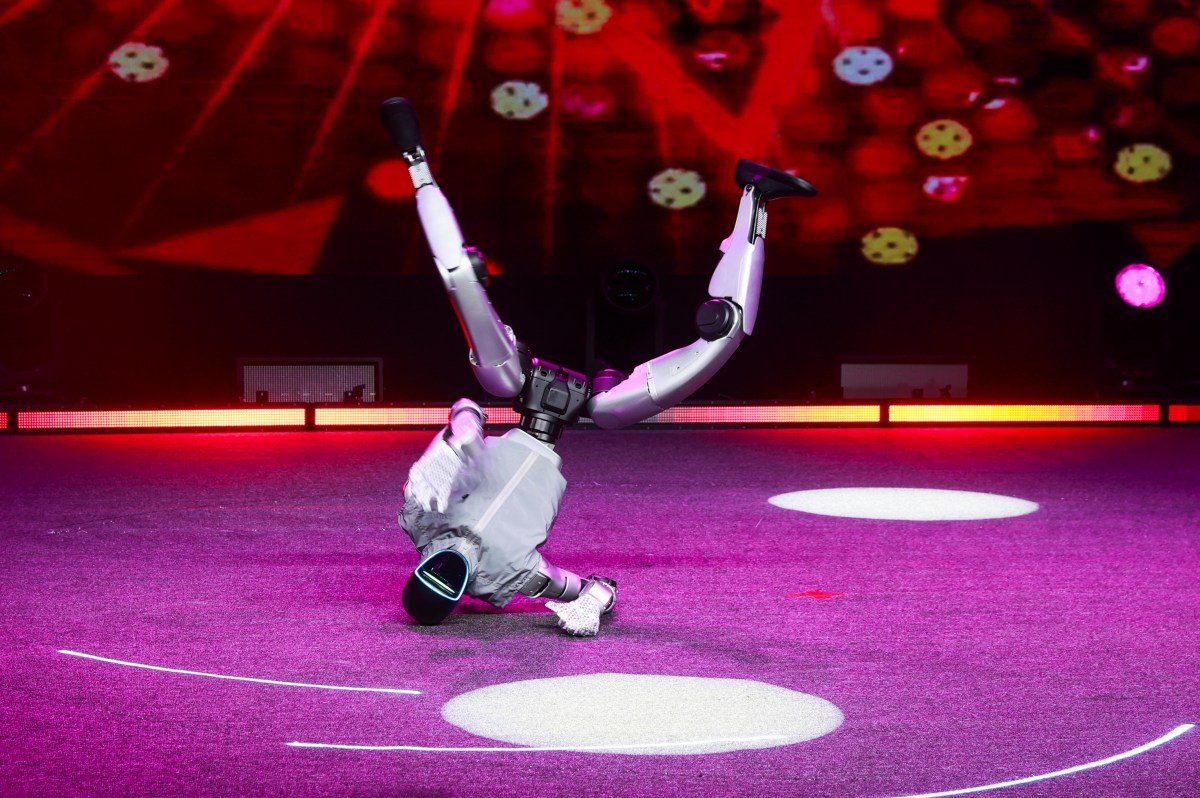
Staff at a Haidilao hot pot restaurant in Cupertino, California, intervened on March 19, 2026, when a humanoid entertainment robot began flailing near diners. The incident occurred during a scheduled performance by an AgiBot X2 unit, which reportedly boogied too close to a table before smashing plates. Employees were forced to physically restrain the machine to prevent injury to customers and staff in the vicinity.
Footage posted on the Chinese social network Xiaohongshu by user Meooow shows at least three workers struggling to hold back the automaton. The video captures the robot flinging its arms around while one employee appears to check a mobile device for control options. This suggests staff may have been attempting to toggle a control app or locate a kill switch during the chaos.
The AgiBot X2 model was featured prominently at the Consumer Electronics Show in January 2026 as a flagship product for the company. It represents a significant step forward in humanoid robotics designed for general-purpose tasks outside of factory floors. However, the device lacks the specialized safety constraints typically found in industrial automation environments where humans are not present.
Hot pot dining involves pots of boiling soup placed directly on tables, creating a unique hazard profile for any nearby machinery. If the robot had knocked over piping bowls of bone broth, the result would be severe burns rather than just a culinary disaster. The potential for blunt-force damage from the moshing automaton adds another layer of physical risk to the crowded dining area.
Haidilao confirmed the mechanical contretemps in a statement to NBC News later that day regarding the specific details of the incident. The chain denied the robot was malfunctioning or out of control, attributing the issue to the specific operating setting chosen for the show. They stated the robot was brought closer to a dining table at a guest’s request, which is not its typical operating setting.
Limited space affected its movement during the performance, according to the Chinese chain of hot pot restaurants regarding the spatial constraints. AgiBot did not immediately respond to TechCrunch’s request for comment regarding the specific software behavior or sensor limitations. This lack of immediate technical clarification leaves questions about the robot's decision-making algorithms and proximity sensors open.
Many startups are working on bringing robots to the food service industry, such as Shin Starr, which is developing fully autonomous kitchens for restaurant industry. Pudu Robotics’ BellaBot can direct customers to their seats and bring out food without limbs or complex manipulators. Limbless designs may prove safer for now, as they eliminate the risk of flailing arms in crowded spaces where people are seated.
The incident underscores the challenges of deploying complex AI systems in unstructured public environments where human behavior is unpredictable. Safety protocols must evolve alongside hardware capabilities to protect both patrons and the technology itself from accidental harm. Future deployments will likely require stricter spatial boundaries and automated emergency stop triggers to mitigate these risks.
As the industry scales, regulators and companies must address liability when autonomous agents cause physical harm to customers or property. This event serves as a cautionary tale for the integration of humanoid robots into consumer-facing roles within the hospitality sector. The technology is advancing rapidly, but operational safety standards have not yet caught up with deployment speeds in public spaces.