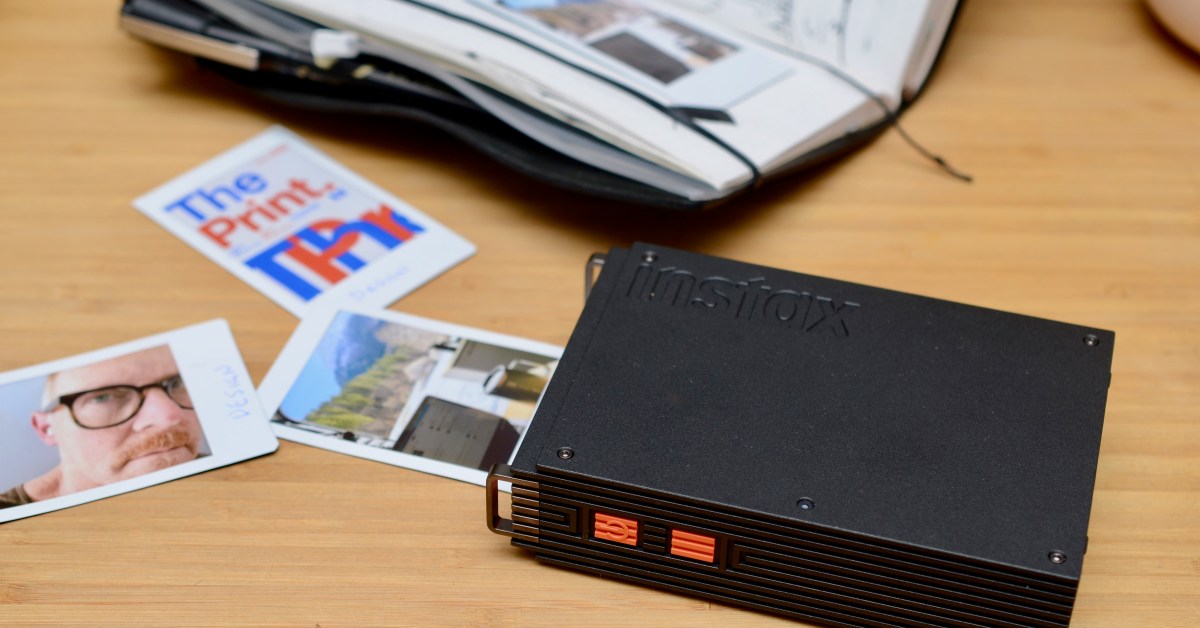
Fujifilm recently introduced the Instax Mini Link+ portable printer, retailing for $169.95, as an updated accessory for instant film enthusiasts seeking higher fidelity prints. This device attempts to overcome the historically soft and sometimes muddy output characteristic of the Instax Mini film format. The printer utilizes the same Instax Mini film as the older Mini Link 3 model, which typically costs between $17 and $30 for a pack of twenty sheets.
The primary hardware upgrade centers on enhanced internal processing, which reportedly delivers superior contrast, richer colors, and increased sharpness across various image types. According to testing reported by The Verge, this improvement is most evident in detailed photographs, such as landscapes and portraits taken under challenging lighting conditions. The Mini Link+ successfully mitigated the tendency of the older model to render intense highlights as simple white blowouts.
Of particular note is the new 'Design Print' mode, touted as a feature to make intricate text and fine illustrations crisp and legible for users. Despite this being a major selling point for the $70 price increase over the Mini Link 3, evaluators noted that this mode offered negligible improvement when printing graphics dominated by fine lettering. Users primarily seeking enhanced text reproduction may find the upgrade less compelling based on these observations.
The companion smartphone application, available for both iOS and Android, remains feature-rich, offering users tools for image organization, virtual reality visualization of prints, and decorative overlays like stickers and filters. While the app provides extensive customization, the core function remains importing images from a library, selecting a print mode, and waiting approximately twenty seconds for the output.
When comparing the 'Simple' mode—which promises smooth color tones—against the 'Design' mode, testers found that the latter generally provided better results for photographic content, especially concerning fine textures on surfaces like rock or wood. Simple mode produces slightly softer images but still represents an overall quality step up from the previous generation's standard output.
Battery performance appears robust, with the unit retaining 80% charge after producing fifteen prints during testing, and it charges via USB-C. Furthermore, the inclusion of a user-replaceable NP-70S battery in European models offers a longevity advantage over sealed units. Overall, the Mini Link+ secures its position as the quality leader in the Instax printing ecosystem for those prioritizing photographic detail.
However, the premium positioning of the Mini Link+ places it in direct market conflict with established dye-sublimation printers, such as the Canon Selphy QX20, which offer superior archival qualities and sharpness against the smaller Instax format. For hobbyists content with the aesthetic of instant film, the upgrade is validated by image quality improvements, provided they manage expectations regarding text clarity.