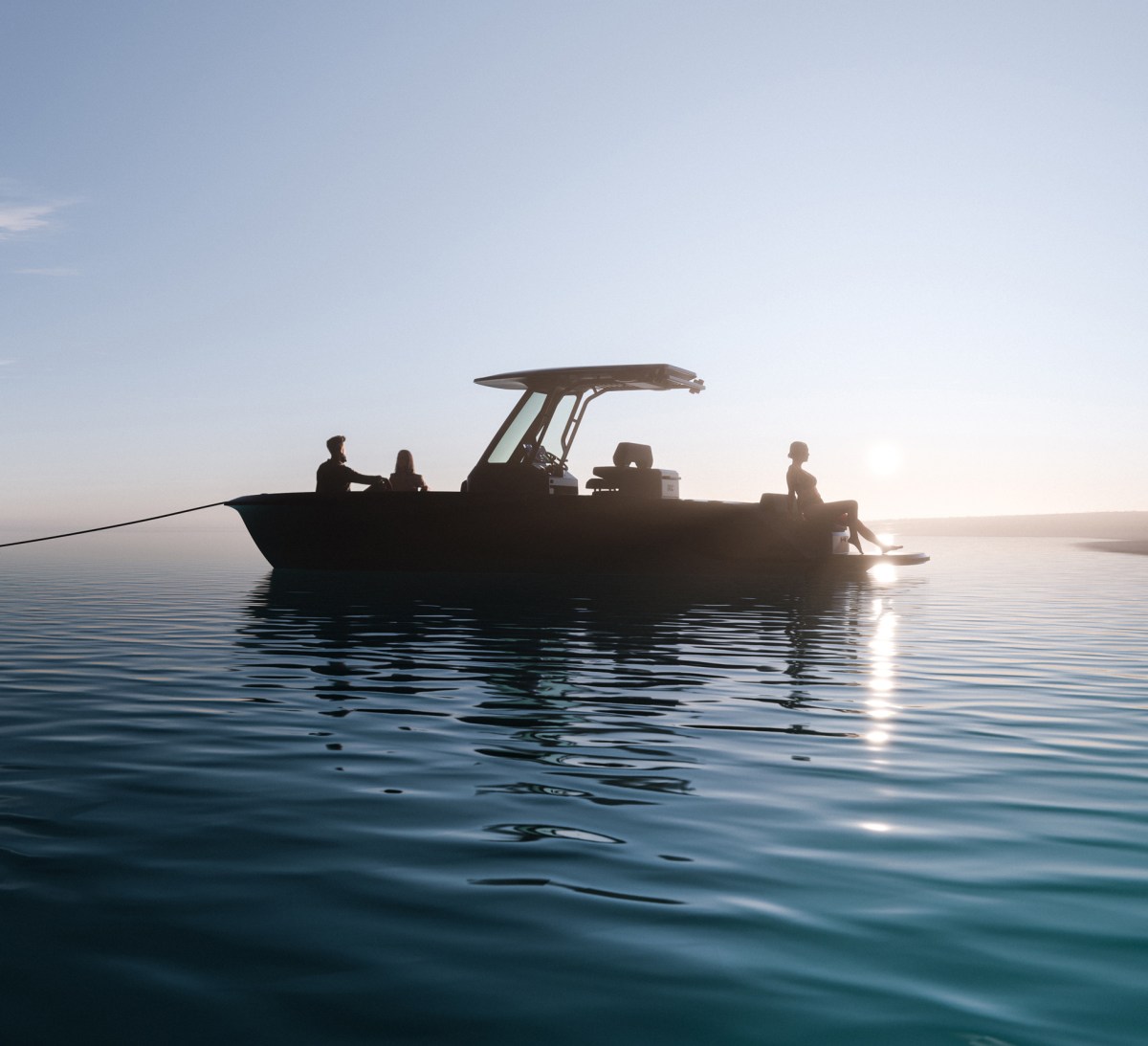
Los Angeles-based startup Arc Boat Company announced a $50 million Series C funding round on Wednesday.
The capital will support expansion into electric commercial vessels and defense applications beyond its existing consumer sport boat business.
Founder Mitch Lee aims to utilize these funds to accelerate the electrification of the entire maritime industry significantly.
Arc secured investment from prominent firms including Eclipse, Andreessen Horowitz, Menlo Ventures, and Lowercarbon Capital.
The round signifies strong confidence in the company's technology as it moves beyond recreational watercraft into heavier industrial markets.
Investors cited the company's rapid development cycles as a key factor in their decision to back the venture significantly.
Lee stated that consumer boat sales remain a priority because they generate meaningful revenue for the company.
These high-end sport boats serve as a testing ground to prove the durability and capability of the electric propulsion systems.
This approach mirrors the strategy Tesla employed in its early years to validate battery technology effectively.
Greg Reichow, a general partner at Eclipse and former Tesla vice president, validated this progression model during the announcement.
He told TechCrunch that developing technology on the high end of consumer boats ensures the economics work for the commercial sector.
This reliability is essential before deploying the systems in demanding commercial environments globally.
Commercial interest accelerated Arc's expansion plans due to shifting cost dynamics in the global shipping sector.
Lee noted that electric power costs are decreasing while combustion engine costs rise due to regulatory compliance burdens.
He described traditional engines as cancer-spewing machines that face increasing operational restrictions and penalties annually.
The defense sector presents a specific opportunity for electric powertrains to enable autonomous watercraft operations.
Lee explained that removing human crew requires a step-function improvement in system reliability and uptime to function.
Propulsion systems must operate without maintenance crews to support autonomous missions effectively over long periods.
Arc plans to manage commercial vessel construction differently than previous projects to meet specific client needs.
The company will likely design boats for customers and build them in conjunction with shipyards like Snow & Co.
For defense contracts, Lee intends to become a direct supplier of propulsion systems to prime contractors and neo-primes.
The company currently employs around 200 people and plans to add staff following the funding announcement this week.
Hiring will focus on production, engineering, and go-to-market teams specifically for commercial watercraft operations.
This growth supports the infrastructure needed to handle larger scale industrial orders and delivery timelines.
Diversification offers financial stability by balancing cash flow with long-term contracts from government and industrial clients.
Lee noted that consumer products provide great cash conversion cycles while commercial applications offer defensibility and stability.
Blending these two models creates a stable and predictable business structure for the long term ahead of schedule.
Reichow highlighted Arc's ability to develop and learn from products quickly as a competitive advantage in the market.
He believes this speed of development will determine the company's long-term success in the maritime space globally.
The industry will watch how this capital deployment translates into actual vessel deployments and contracts soon.