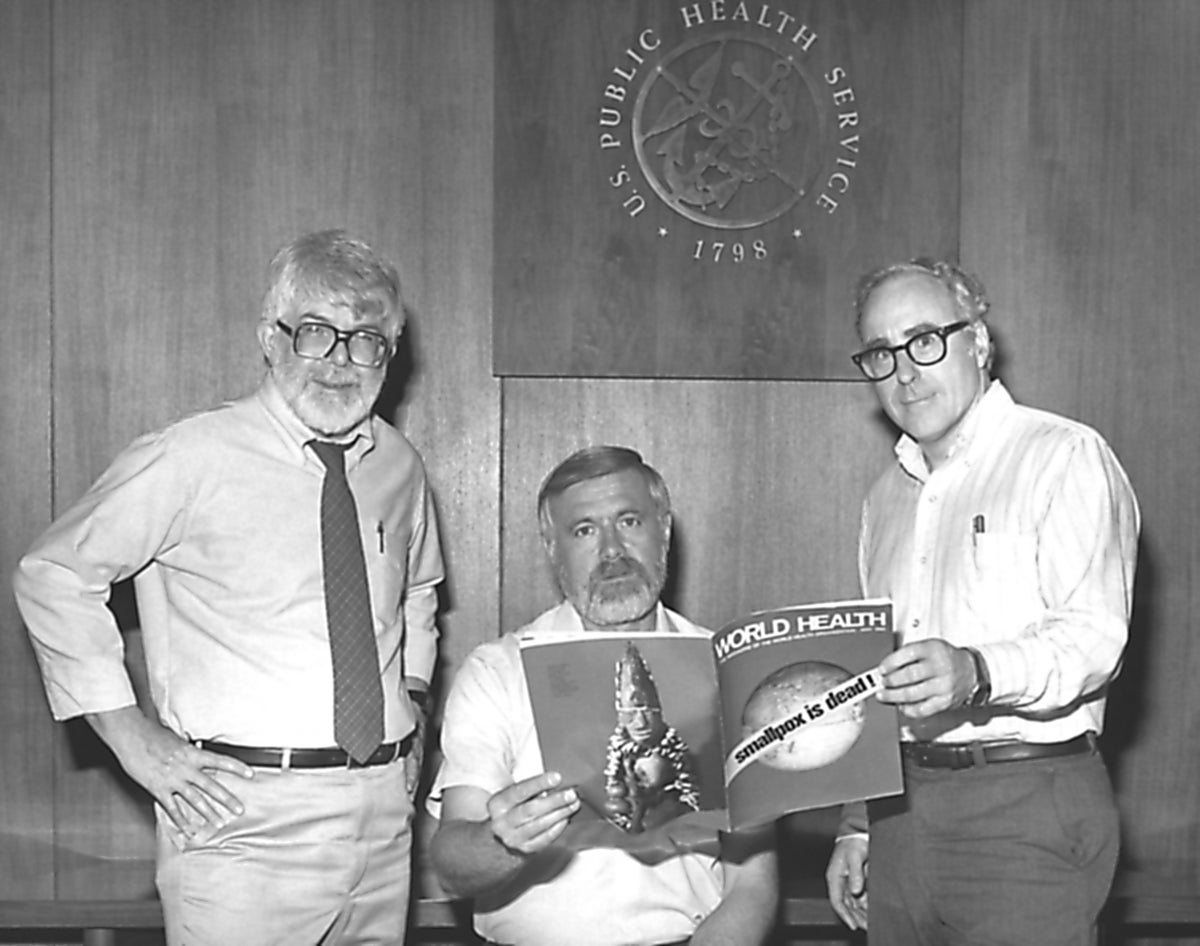
William Foege, a pivotal figure in global public health best known for championing the successful eradication of smallpox, died on Saturday at the age of 89, according to the Task Force for Global Health, an organization he helped co-found.
Foege headed the U.S. Centers for Disease Control and Prevention’s Smallpox Eradication Program throughout the 1970s, guiding the final push against the highly lethal virus. Official records indicate that the last naturally occurring case of smallpox was recorded in 1977, preceding the disease’s formal eradication in 1980.
Former CDC director Tom Frieden stated to the Associated Press that Foege ranks among the most significant figures in saving human lives, estimating that the successful eradication effort prevented hundreds of millions of deaths globally. Foege later served as CDC Director and held advisory roles at the Bill & Melinda Gates Foundation, receiving the Presidential Medal of Freedom in 2012 from President Barack Obama.
Beyond smallpox, Foege remained an active voice in vaccine advocacy throughout his later career. He co-authored an article in Scientific American in 2013 with epidemiologist Larry Brilliant regarding the progress toward polio eradication. They expressed optimism that concerted efforts would soon relegate polio alongside smallpox to the history books.
In a more recent political context, Foege joined several former CDC directors in 2025 to publish an op-ed in The New York Times. They voiced strong criticism regarding the policies enacted by then-Secretary of Health and Human Services Robert F. Kennedy, Jr., describing his tenure as unprecedentedly disruptive to the agency’s operations.
Patrick O’Carroll, CEO of the Task Force for Global Health, remembered Foege in a statement as an inspirational leader. O’Carroll noted that Foege’s compassion and clear vision consistently reawakened optimism in both new and veteran public health professionals seeking to improve global conditions.
Foege’s career established a significant precedent for coordinated, science-driven international health campaigns. His methodology for surveillance and containment remains a foundational case study for ongoing global health initiatives, including the push to eradicate polio.