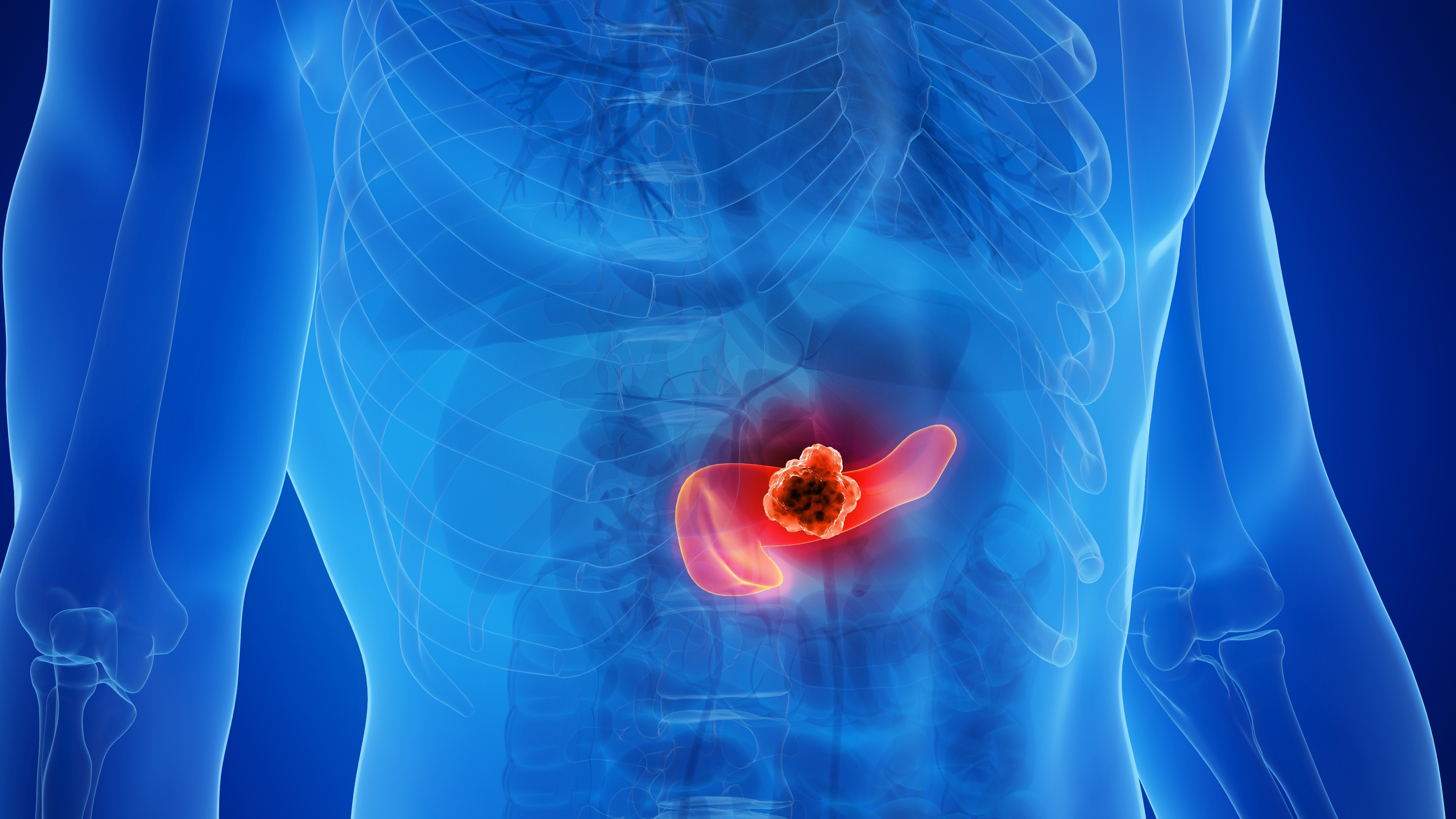
Researchers at the Spanish National Cancer Research Center announced a significant development in treating pancreatic cancer, demonstrating a triple-targeted drug combination that causes complete and enduring tumor regression in various preclinical models. This study addresses the notoriously poor survival rates associated with pancreatic ductal adenocarcinoma (PDAC), the most common and lethal form of the disease.
The combination therapy is engineered to disrupt three separate, vital signaling pathways that drive tumor growth and survival: RAF1 (downstream), EGFR family receptors (upstream), and STAT3 (orthogonal) signaling relative to KRAS activity. The authors stated that ablating these three independent nodes leads to permanent regression of orthotopic PDACs driven by common KRAS/TP53 mutations.
Testing utilized orthotopic mouse models where tumor cells were implanted in the native pancreatic environment to ensure relevance to human physiology. The results showed not only tumor reduction but a complete halt in growth, with no evidence of resistance noted for over 200 days post-treatment, according to the report.
Further validation included testing the regimen on genetically engineered mice and in patient-derived tumor xenografts (PDX), which are human cancer tissues grown in laboratory mice. These extended tests also yielded significant tumor regression, strengthening the translational potential of this multi-pronged attack.
One of the primary challenges in targeted cancer therapy is the inevitable development of resistance, which this combination appears to circumvent by attacking multiple dependency nodes concurrently. The scientists concluded that overcoming resistance in PDAC necessitates coordinated inhibition across these distinct survival mechanisms.
Crucially, the potent anti-tumor effects were achieved with a regimen that demonstrated a favorable safety profile, being well-tolerated by the animal subjects. This tolerability suggests a potentially manageable toxicity profile for future human trials, according to the research team.
These preclinical successes provide a strong rationale for designing forthcoming clinical trials aimed at benefiting PDAC patients who currently face limited effective therapeutic options. The durability of the response observed marks an important advancement in developing next-generation multi-targeted approaches for this challenging disease.