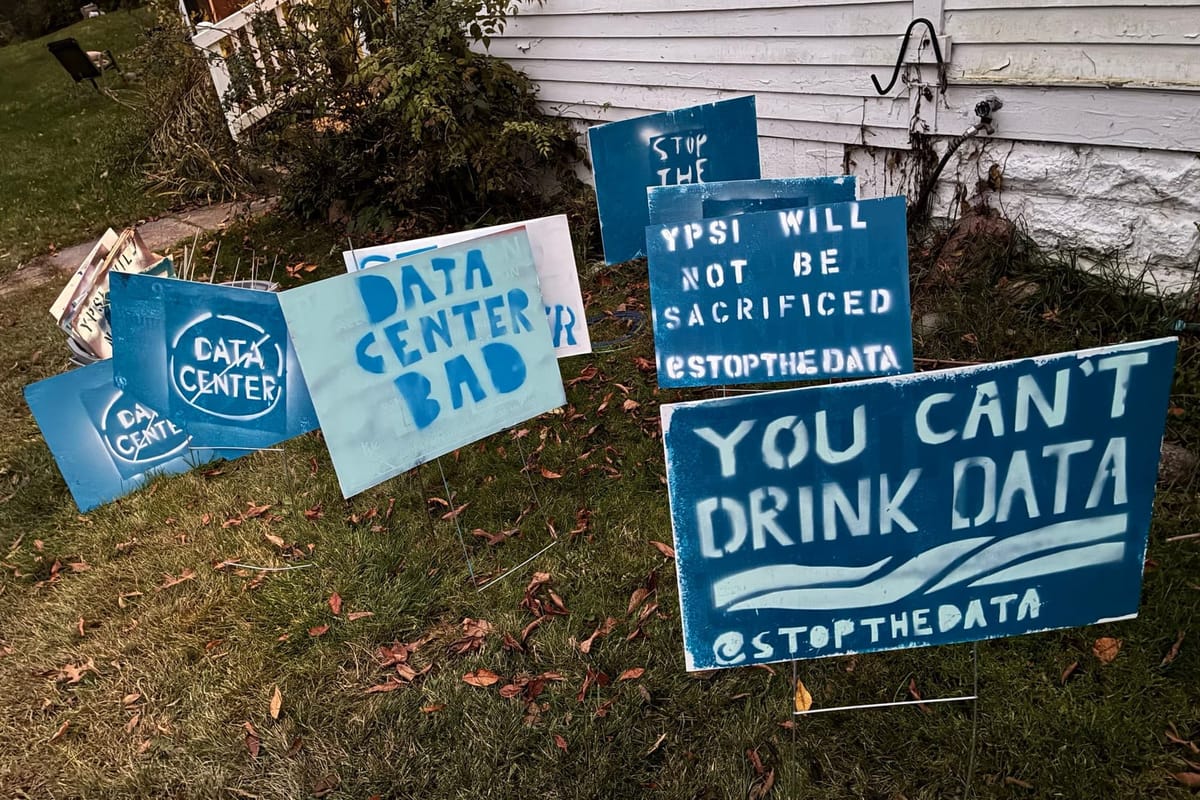
The tiny township of Ypsilanti, Michigan, faces a unique security threat due to a planned datacenter designed for nuclear weapons research. According to Douglas Winters, the township attorney, the University of Michigan and Los Alamos National Laboratories have placed a target on the community. Residents fear that the facility will make the area vulnerable to drone strikes similar to those seen in the Middle East. This announcement emerged during a public board meeting on Tuesday, where the scope of the project was detailed to local officials. The facility is intended to support advanced computing operations for the Department of Energy national laboratories.
The University of Michigan and Los Alamos National Laboratories first announced their plan to construct a $1.25 billion datacenter in 2024. Officials selected Ypsilanti Township, which has a population of approximately 20,000 people, as the primary location for this massive infrastructure project. Since the initial proposal, residents have organized opposition efforts against the construction of the computing facility. The core concern distinguishes this project from typical commercial datacenters by its direct link to nuclear weapons modeling. Los Alamos confirmed in January that the system would handle sensitive nuclear research data without public disclosure.
Winters argued that the United States military may struggle to protect such high-value targets from modern drone threats on domestic soil. He cited the ongoing conflict in Iran as evidence, noting that Iranian drones successfully disabled Amazon Web Services servers in the region. The township attorney emphasized that artificial intelligence and supercomputers represent significant power that could attract hostile actors. He stated that the datacenter would serve as the brains of the nuclear weapons operation, making it a priority target for adversaries. The potential for drone warfare to reach American territory remains a significant point of contention for the local community.
Community concerns regarding water usage, rising electricity bills, and noise pollution are common in datacenter disputes across the nation. However, the specific role of this facility in nuclear weapons production adds a layer of geopolitical risk to the local environment. Critics argue that the university chose a vulnerable demographic rather than a site closer to the actual weapons production facilities in New Mexico. Trustee Karen Lovejoy Roe questioned why the laboratory did not locate the datacenter near the plutonium pits under construction in South Carolina. She suggested that the university viewed the township as an easy target due to its socioeconomic profile.
Winters also highlighted recent policy shifts at the University of Michigan that critics link to federal government pressure. The institution eliminated its diversity, equity, and inclusion programs in 2025 following a demand from the White House. Additionally, the university announced the end of the PhD Project in February, which previously assisted underrepresented backgrounds. Winters described the situation as the university cutting a deal with the Department of War under the current administration. He accused the administration of selling their institutional soul to support defense industry needs over public welfare.
Jay Coghlan, executive director of Nuclear Watch New Mexico, provided expert context regarding the technological implications of the datacenter. He stated that the facility will function as the brains for nuclear modeling and weaponry, effectively centralizing dangerous capabilities. A recent study found that artificial intelligence systems went to escalation and nuclear war scenarios 95% of the time during war games. Coghlan noted that the lab has historically colonized brown people in New Mexico just as they are attempting to do in Ypsilanti. He warned that the water resources in Michigan are a resource that the local population might lose to this industrial project.
Local officials expressed difficulty in getting the university, county, and other powers to engage meaningfully with the opposition. Many interested parties plead ignorance or recuse themselves because of financial involvement with the University of Michigan. Winters compared the behavior of these government entities to The Godfather, making an offer that people cannot refuse. Residents are exploring creative legal avenues, including moratoriums on substations and heavy construction on local roads. A local resident named Sarah suggested blocking the project at every step to prevent the university from proceeding.
Another resident named Holly proposed that the university vulnerability lies in their public reputation rather than legal standing alone. She argued that the community needs to continue making the institution look as bad as possible to halt the project. This strategy relies on damaging the prestige of the educational institution to force a reconsideration of the site selection. The township is not completely powerless despite the significant resources available to the university and federal contractors. Residents are determined to stand strong against what they view as an unjust imposition on their safety.
The University of Michigan did not return a request for comment from 404 Media regarding the security concerns raised by residents. Los Alamos National Laboratories also did not provide a public statement addressing the specific fears of drone strikes. This lack of transparency continues to fuel speculation about the true risk profile associated with the datacenter. Future developments will depend on whether local regulations can effectively block the necessary infrastructure builds. The outcome of this conflict could set a precedent for how nuclear computing projects interact with civilian communities.
The broader implications extend beyond Ypsilanti to include how AI and defense contracting intersect with local governance. As supercomputing becomes central to national security, civilian areas may face increased risks from state-level military operations. Watchers will observe if similar facilities are proposed in other regions facing comparable demographic pressures. The situation highlights the growing tension between technological advancement and community safety in the nuclear age.