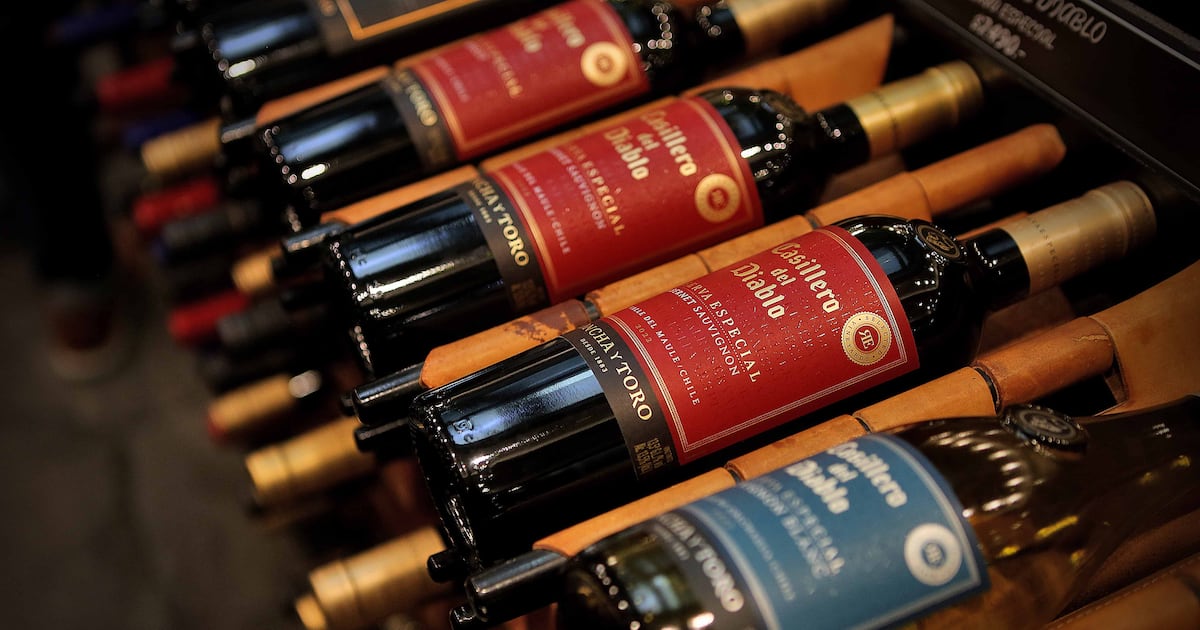
Concha y Toro presented its 2025 financial balances to investors last week according to a detailed report by La Tercera. The winery reported a 13.2 percent decline in profits but noted sales growth exceeding the industry average significantly. CEO Eduardo Guilisasti detailed a total investment of nearly US$572 million since 2017 during the presentation to stakeholders. The presentation occurred during the week of late 2025.
Consolidated profits reached $67.22 billion Chilean pesos, down sharply from the previous year results reported. Sales improved by 1.7 percent, positioning the firm as the third fastest growing actor in the sector overall. Competitors showed growth rates of 2.4 percent, 2 percent, and 1.6 percent, while others saw revenue declines between 0.4 percent and 11 percent. These figures reflect the broader economic pressures affecting the Chilean wine sector.
The investment figure represents a significant capital expansion over the last eight years of continuous operations. Agricultural investments accounted for the largest share at 42 percent of the total amount spent on growth. This sector received approximately US$242.5 million to expand vineyard operations across key regions in South America and North America. Such spending underscores the firm commitment to securing long-term raw material supplies.
The company currently plants nearly 12,800 hectares between Chile, Argentina, and California vineyards globally. Most of these lands are located in Chile, totaling 10,992 hectares for domestic production and export. Guilisasti confirmed that 815 hectares remain to be planted in the domestic territory to reach full capacity. Land management remains a critical component of the overall production strategy.
Enology investments totaled US$158.2 million, representing 27 percent of the overall spending on production quality. Operational improvements consumed almost US$70 million, or 12 percent of the capital allocated for efficiency. Technology and distribution subsidiaries received US$47 million, making up 8 percent of the total budget for modernization efforts. These funds support the integration of advanced viticulture techniques.
New business ventures comprised 10 percent of total investments, amounting to US$54.3 million since 2017 inception. This category includes the Centro del Vino in Pirque and increased stakes in the Kross brewery operations. The beer business saw a 31.2 percent volume growth, driven by the Odissea brand introduced in 2024. The Centro del Vino serves as a key hub for enotourism activities.
Kross brand performance highlighted exceptional growth while imported beer segments faced high competition challenges. The acquisition of Mal Paso pisco brand also falls within this new business investment category. Management noted that the local beer business grew explosively compared to previous fiscal years. This segment demonstrates the potential for alternative beverage growth in the region.
In February 2026, the firm acquired the French rosé specialist Maison Mirabeau for strategic expansion. This deal was excluded from the 2017 to 2025 investment totals as it closed after the reporting period. The acquisition strengthens the company presence in Europe and aligns with growth in origins strategy. It marks a significant step into the European rosé market.
Guilisasti stated the brand portfolio is evolving to focus on high-growth opportunities and operational efficiency. The number of brands has decreased significantly to concentrate on assets with stronger potential. Future growth will prioritize new origins with premium brands and minimal fixed asset investment requirements. The reduction in brand names simplifies marketing and distribution.
Marketing and innovation centers are developing new products for launch later this year or early next. The goal is to respond directly to consumer needs through targeted development and research initiatives. Continued inorganic growth remains a priority for the family-owned enterprise as it navigates the global market. The innovation center focuses on sustainability and consumer trends.