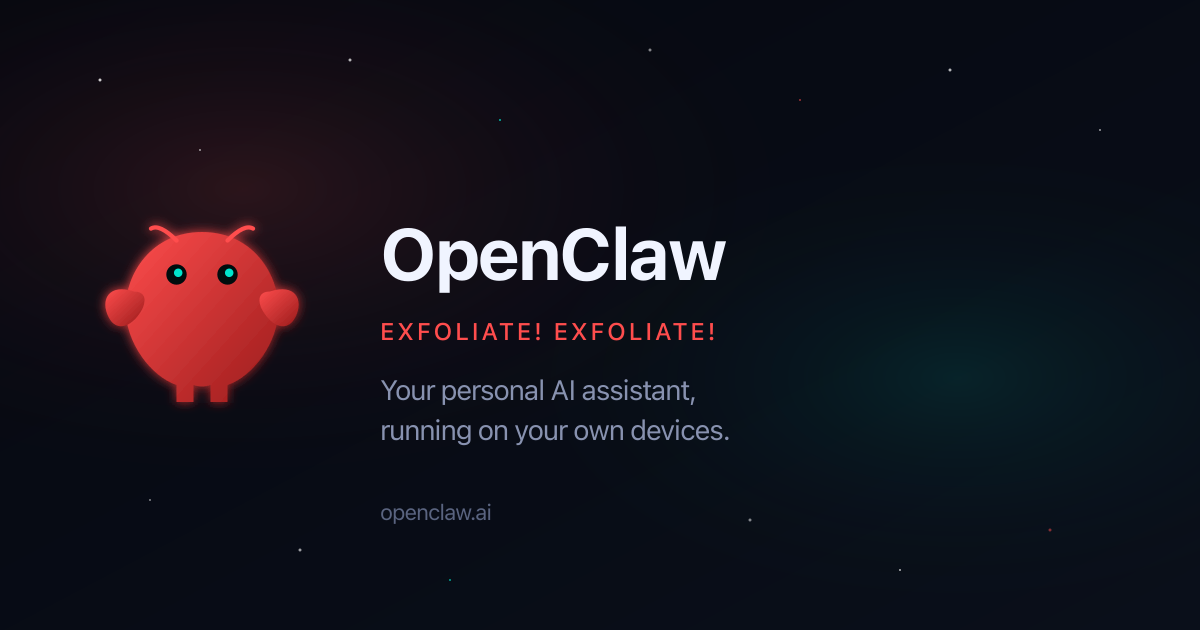
The open-source project that rapidly gained traction as a weekend hack has announced its official rebranding to OpenClaw, according to a recent post on the OpenClaw blog. The platform functions as an open agent system designed to operate directly on a user's local machine, integrating with existing communication channels such as WhatsApp, Telegram, and Slack.
This transition followed an initial name, Clawd, which the developers voluntarily changed after receiving a polite request from Anthropic's legal team regarding potential trademark conflicts. The subsequent name, Moltbot, was ultimately replaced by OpenClaw, which the team confirmed has undergone thorough trademark clearance.
OpenClaw positions itself as a direct counterpoint to Software-as-a-Service (SaaS) AI assistants by ensuring user data remains off third-party servers. The core value proposition centers on user control: "Your assistant. Your machine. Your rules," emphasizing that infrastructure and encryption keys remain under the user's domain.
Alongside the rebrand, the developers released machine-checkable security models, acknowledging that prompt injection remains an industry-wide challenge. The team stressed the importance of utilizing robust models and adhering to published security best practices for hardening the local deployment.
The project's rapid scaling necessitated organizational changes, as the original creator noted the growth exceeded solo maintenance capacity. New maintainers are being onboarded, and processes are being established to manage the high volume of pull requests and reported issues.
Looking ahead, the development focus remains fixed on security enhancements, improving gateway reliability, and expanding support for additional AI models and service providers. The organization is also exploring methods to compensate maintainers appropriately, potentially offering full-time roles.
This evolution from a small utility to a structured open platform reflects a broader trend toward decentralized and user-controlled AI infrastructure. The team thanked the community, referred to as the "Claw Crew," whose contributions fueled the project's accelerated development cycle.